Top Ad 728x90

dimanche 15 février 2026

Online Sleuths Float a New Theory About the Masked Figure in Nancy Guthrie Footage, Here is What Officials Say

by


In the high-stakes digital age, a few frames of grainy security footage can ignite a firestorm of public speculation that rivals official investigative efforts. This is exactly what has happened in the ongoing search for Nancy Guthrie, the 84-year-old mother of Today show co-anchor Savannah Guthrie, who vanished from her Tucson-area home on the morning of February 1, 2026. After a week of agonizing silence and technical hurdles, the FBI’s release of newly recovered doorbell camera footage has not only provided the first visual of a suspect but has also birthed a viral “online sleuth” theory that is currently clashing with the official narrative provided by federal agents.

The Digital Breakthrough

The breakthrough in the case came on February 10, when FBI Director Kash Patel announced that forensic experts from the bureau’s Operational Technology Division had successfully retrieved “residual data” from a Google Nest camera at Nancy’s residence. Previously, investigators had been frustrated by the lack of footage; the camera had been disconnected at 1:47 a.m. on the night of the abduction, and because the home did not have an active cloud subscription, any motion-triggered data was feared lost or overwritten.+1

However, through what has been described as a “needle in a haystack” recovery process, the FBI shared a 44-second clip and several high-resolution stills. The footage depicts a chilling scene: a masked figure, dressed in dark tactical gear and gloves, prowling onto Guthrie’s porch in the dead of night. The individual is seen tampering with the camera, raising a hand to block its view, and eventually attempting to obscure the lens entirely with a fistful of prairie brush torn from a nearby bush.+2

The “Sleuth” Theory: A Question of Identity

Almost immediately after the footage hit social media, internet sleuths began a forensic analysis of their own. Zooming into the small sliver of exposed skin around the suspect’s eyes, a theory began to gain massive traction across TikTok and X (formerly Twitter). Commenters pointed to the shape of the eyebrows and the length of the eyelashes, arguing that the features appeared “distinctly feminine” or “too meticulously groomed” for the average male suspect.

Side-by-side comparisons with various local residents and “persons of interest” flooded the internet, with many speculating that the kidnapper might be a woman in a disguise meant to mimic a larger male frame. The theory has been fueled by a culture of amateur true-crime investigation that prioritizes subtle physical cues over broader forensic profiles. While some experts note that ski masks often compress the face and distort features—and that lighting in black-and-white night vision can create artificial contrast—the “female suspect” theory has become a dominant pillar of the online conversation surrounding the case.

The Official Profile: A Targeted Search

Despite the viral noise, the FBI and the Pima County Sheriff’s Department have remained steadfast in their official description, which leans heavily into tangible, reportable evidence rather than subjective facial analysis. On February 13, the FBI released a confirmed suspect profile based on their forensic analysis of the person’s gait, height, and equipment.

The suspect is officially described as a male, approximately 5 feet 9 inches to 5 feet 10 inches tall, with an average build. Rather than focusing on eye shape, investigators have urged the public to look for specific pieces of gear seen in the video. Most notably, the suspect was wearing a black “Ozark Trail Hiker Pack”—a 25-liter backpack sold at Walmart—and appeared to have a handgun holster strapped to his waist.+1

“Does somebody recognize how someone walks like that?” retired FBI Special Agent Jason Pack told CBS News. “Somebody’s going to know if this is a relative, a friend, or a coworker. We need people to look at the clothing, the demeanor, and the gear.”

Intensifying Operations in Tucson

While the public debates the suspect’s gender, the physical investigation has entered a frantic and aggressive phase. On Friday night, February 13, a major law enforcement operation unfolded just two miles from Nancy Guthrie’s home. Roads were sealed off as a parade of FBI and forensics vehicles descended on the area. At a nearby restaurant, authorities were seen towing a silver Range Rover SUV after holding up sheets to block the public’s view of the vehicle’s trunk.+2

Reports indicate that at least three individuals were detained for questioning during these Friday night operations. This follows the earlier detention and release of a delivery driver from Rio Rico, Arizona, who was questioned after his eyes were purportedly matched to the footage—a move that demonstrates how seriously investigators are taking the “eye-profile” leads, even if they aren’t ready to pivot their official description.

A Family’s Desperate Plea

In the center of this storm are Savannah Guthrie and her siblings, Annie and Camron, who have become the faces of a heartbroken family pleading for mercy. The search has been complicated by a series of ransom notes—some confirmed as hoaxes by “imposter” opportunists and others still being treated with “utmost seriousness” by federal agents. One note, delivered to TMZ, demanded a single Bitcoin in exchange for the kidnapper’s identity, highlighting the digital-age complexities of modern abductions.+1

Savannah has made multiple emotional appeals directly to the captor. “This is incredibly valuable to us, and we will pay,” she stated in a video message, her voice thick with the desperation of a daughter whose mother requires daily medication for heart issues and a pacemaker. “We need to know without a doubt that she is alive.”+1

As the FBI increases the reward to $100,000, the case has become a collision of two worlds: the methodical, evidence-based work of federal investigators and the rapid-fire, speculative world of online detectives. Whether the “sleuths” have spotted a detail missed by the experts or are simply chasing shadows in a grainy video remains to be seen. What is certain is that every hour counts for Nancy Guthrie, and the “man in the mask”—whoever they are—is now the target of one of the most intense manhunts in recent Arizona history.

After five years of bathing him, lifting him, and serving as his full-time caregiver

by


When people hear the phrase five years, it sounds insignificant—like a brief passage, a few pages easily skimmed. But when those years aren’t marked by seasons or holidays, when they’re counted instead in fluorescent hospital halls, pill organizers, and the sharp, lingering smell of disinfectant that clings to your skin, time behaves differently. It thickens. It settles heavily in your lungs. It turns into a burden you haul forward instead of a space you inhabit.

My name is Marianne Cortez. I’m thirty-two years old, and the woman in my reflection feels like a stranger. Her posture is curved inward, as though she’s constantly bracing herself. Dark circles frame eyes that rest never seems to reach. And my hands—my hands reveal everything. Raw from constant washing. Calloused from lifting a body never meant to be carried alone. Shaped by wheelchair handles and hospital bed rails.

Once, my life was simple. Hopeful, even. I met my husband, Lucas Cortez, at a local fundraiser in Boulder. He had an ease about him that made people feel seen, singled out. When he spoke, attention followed. When he smiled, it felt personal. We married fast, driven by plans that seemed solid and mutual—kids, travel, a bigger house somewhere quieter. A future that felt deserved.

That future ended on a bend of highway outside Golden, a curve everyone warned about and everyone thought they could manage. Lucas was driving home from a regional sales conference when a drunk driver crossed the median. The crash destroyed the car, spared his life, and took the use of his legs.

At Front Range Medical Pavilion, the neurologist explained the damage calmly, clinically. His words carried certainty. When he finished, silence filled the room so completely it felt physical.

I didn’t cry. I held Lucas’s hand and promised I wasn’t going anywhere. I said we’d find a way forward. I believed love meant persistence.

What I didn’t realize was how quietly sacrifice can erode a person.
The years blurred into repetition. Pre-dawn alarms. Medication charts taped to the fridge. Insurance calls that led nowhere. Sleeping on the couch so I’d hear him if he needed me. I learned how to lift without injury, how to smile through exhaustion, how to swallow resentment while strangers praised my strength.

One Tuesday—indistinguishable from countless others—my alarm rang at four-thirty. The city was dark, cold, silent enough to amplify every thought. I dressed for practicality, not pride, and mentally recited the day’s tasks.

Lucas had been craving pastries from a bakery near the hospital. He said hospital meals made him feel like a burden. I convinced myself that something warm and familiar might help.

The bakery glowed when I arrived. Butter and sugar filled the air, and for a moment, I pretended I was just another woman buying breakfast for someone she loved.

The cashier smiled. “What can I get you?”
“Two cinnamon rolls, a box of plain pastries, and a black coffee,” I said.

I paid carefully and drove toward the hospital, the bag on the seat beside me, imagining Lucas’s reaction.

Inside, the familiar bite of antiseptic met me. A volunteer mentioned Lucas was in the courtyard with another patient. I headed toward the glass doors, smoothing my hair, trying to appear less worn.

Then I heard him.

“You adjust,” Lucas said. “People think it’s tragic, but honestly, there are perks.”

The other man laughed. “Your wife does everything. That doesn’t bother you?”

“Why would it?” Lucas replied easily. “Marianne’s dependable. She doesn’t leave. She has nowhere else to go.”


I stopped just out of view, my breath trapped in my chest.

“Sounds like you made out well,” the man said.

“I did,” Lucas answered. “Full care, no cost. No facilities. No bills. Just patience and hope keeping her right where she is.”

“What about your estate?” the man asked.
Lowering his voice slightly—though not enough—Lucas said, “That’s secured for my son and my sister. Blood stays blood. Marianne thinks loyalty guarantees permanence.”

They laughed together.

I stood there holding a bag of pastries that suddenly felt grotesque. What I thought was love had become convenience. What I gave freely had turned into control.

I didn’t confront him. I didn’t cry. I turned away and dropped the bag into a trash bin near the exit.

Walking back to my car, something settled inside me. Anger burned—but beneath it was clarity. Reacting would cost me everything. Waiting would give me my life back.

Lucas texted minutes later, complaining about hunger, asking where I was. I replied evenly that my car had stalled and I’d be late.

Instead of going home, I drove to the county library. I sat among the shelves, opened my laptop, and felt my hands steady for the first time in years.


Over the next weeks, I was precise. I kept caring for Lucas. Kept the routine. Kept playing the role he expected—while quietly collecting evidence. Financial records. Legal documents. Insurance policies that excluded me. Legally recorded conversations. Meticulous notes.

I called an old colleague, Natalie Grayson. She listened without interrupting, then gave me the name of an attorney known for strategy, not sentiment. Evelyn Porter didn’t offer comfort. She offered a plan.

By the time Lucas understood what was happening, it was done. Accounts frozen. Papers filed. The story reframed—from abandonment to exploitation.

He called me cruel. His family called me disloyal. None of it mattered.
The day I moved out, I felt no drama—only relief. The door closing behind me wasn’t an ending. It was freedom.

Months later, the hospital contacted me when Lucas was admitted again. I declined involvement. His care now rested with the people he’d chosen.

Today, I sit in a bright café Natalie and I opened together. I write during the slow hours, watching strangers pass, each carrying lives I no longer fear or envy.

I am no longer a shadow holding someone else upright.

I am whole.

And once dignity is reclaimed, it does not ask permission to stay.


Nobel Peace Prize Rules Explained After White House Medal Presentation Sparks Debate

by


A recent White House meeting between President Donald Trump and Venezuelan opposition leader María Corina Machado has sparked widespread discussion online — particularly after Machado presented a framed medal during the visit. The moment quickly gained attention, with many asking whether it was connected to the Nobel Peace Prize and what the official rules actually are.

While the image circulated rapidly on social media, confusion followed just as quickly. Some viewers assumed the presentation was related to a Nobel Peace Prize nomination or award, prompting renewed interest in how the Nobel Peace Prize process truly works.

The Nobel Peace Prize is awarded annually by the Norwegian Nobel Committee, which operates independently of governments and political institutions. Contrary to popular belief, the prize is not granted by political leaders, nor is it decided by a public vote.

Eligible nominators include specific groups such as members of national assemblies, university professors in certain fields, previous laureates, and members of international courts. Individuals cannot nominate themselves, and nominations are kept confidential for 50 years.

Each year, hundreds of candidates are nominated. The committee reviews submissions in strict privacy before announcing a shortlist. The evaluation process can take months and involves reviewing documented contributions to peace efforts, conflict resolution, humanitarian work, or international diplomacy.

It is important to note that simply being nominated does not guarantee selection, and nominations alone are not considered official endorsements. In fact, many public figures across the political spectrum have received nominations in the past without ultimately receiving the award.

The White House medal presentation involving Machado and Trump does not represent an official Nobel Peace Prize award. Instead, it appears to have been a symbolic or ceremonial gesture, separate from the Norwegian Nobel Committee’s formal process.

María Corina Machado, known for her opposition to Venezuela’s government and advocacy for democratic reform, has been active internationally in discussions around political freedom and governance. Her meeting with President Trump has drawn attention due to the broader geopolitical context.

Supporters of the president argue that international diplomacy efforts, negotiations, and political agreements are legitimate topics of Nobel discussion. Critics, meanwhile, stress that the Nobel Peace Prize process remains independent and highly structured.

Historically, the Nobel Peace Prize has been awarded to a diverse range of recipients, including political leaders, humanitarian organizations, activists, and diplomats. Selection criteria focus on measurable efforts toward peace, conflict resolution, and international cooperation.

The Norwegian Nobel Committee typically announces the winner in October, with the formal ceremony held in Oslo in December. The prize includes a gold medal, a diploma, and a monetary award funded by Alfred Nobel’s endowment.

Because nominations remain sealed for decades, speculation often fills information gaps. This has contributed to misunderstandings whenever public figures are associated with peace-related discussions.

In the age of social media, images can circulate faster than context. The White House moment between Machado and Trump demonstrates how symbolic gestures can quickly evolve into broader public debate.

Political symbolism often carries different meanings for different audiences. For some, the image represented international recognition. For others, it raised questions about the distinction between symbolic honors and official awards.

Understanding the formal Nobel Peace Prize rules helps separate speculation from fact. The process is governed by established guidelines and remains outside the control of individual political offices.

While the meeting itself reflects ongoing political dialogue, it does not change the independent structure of the Nobel selection process.

As public interest continues, experts emphasize the importance of reviewing verified information when discussing international honors and awards.

The broader takeaway from the discussion is clear: symbolism and official recognition are not the same thing. And when it comes to the Nobel Peace Prize, the final decision rests solely with the Norwegian Nobel Committee.

Six symptoms of bowel cancer after James Van Der Beek dies aged 48!

by


The passing of James Van Der Beek at the age of 48 has sent a profound shockwave through the global community, serving as a visceral reminder that colorectal cancer is no longer a disease exclusive to the elderly. Less than two months before he succumbed to the illness, the actor shared a message that has now become his most enduring legacy: “You can have no symptoms and still have cancer.” This simple, haunting observation highlights the insidious nature of a disease that often wears a mask of perfect health until it reaches an advanced stage.

Colorectal cancer, which includes both colon and rectal cancers, remains one of the most formidable adversaries in modern medicine. In 2020 alone, an estimated 930,000 people died from the disease worldwide. As we move through 2026, the American Cancer Society projects approximately 55,230 deaths in the United States, cementing its position as the second-leading cause of cancer-related deaths among men and women combined. Perhaps most alarming is the shifting demographic; while overall cancer rates are declining, cases in adults under 50 have been steadily rising for decades, a phenomenon that oncologists are still racing to fully understand.

Van Der Beek’s journey began in 2023 with symptoms so subtle they were easily ignored. In a 2024 interview with People, he admitted that he had always associated cancer with the sedentary or the elderly. At 46, he was in peak physical condition, a father of six who prioritized fitness and nutrition. When he noticed slight changes in his bowel habits, he initially attributed them to his diet or the stresses of a busy life. It was only when dietary adjustments failed to rectify the issues that he pushed for further investigation.

A colonoscopy—the gold standard for detection—revealed stage 3 colorectal cancer. Van Der Beek described the diagnosis as a total “system shock.” He had felt relatively well, a common and dangerous characteristic of this specific malignancy. Unlike many other illnesses that announce themselves with pain or fever, colorectal cancer often begins as a small, benign growth called a polyp. Over years, these polyps can transform into cancer, often without causing any physical sensation until the tumor is large enough to cause a blockage or bleed.

The Six Critical Symptoms to Watch
While James Van Der Beek rightly warned that symptoms can be non-existent, there are six primary indicators that necessitate an immediate consultation with a gastroenterologist. Understanding these can be the difference between a treatable diagnosis and a terminal one.

  1. Changes in Bowel Habits

This is often the first, most subtle sign. It isn’t just about constipation or diarrhea, but a persistent change in the “normal” rhythm of your body. This includes a change in the consistency of the stool or a narrowing of the stool—sometimes referred to as “pencil stool”—which can indicate that a tumor is obstructing the passage.

  1. Rectal Bleeding or Blood in the Stool

Bright red blood usually indicates an issue near the exit, like hemorrhoids, but it should never be dismissed without a professional opinion. Darker, maroon, or black tarry stools can indicate bleeding higher up in the colon.

  1. Persistent Abdominal Discomfort

This can range from frequent gas pains and bloating to fullness or cramping. If you find yourself reaching for antacids or anti-gas medication for weeks on end without a clear cause like a stomach virus, the underlying issue may be structural.

  1. The Feeling of Incomplete Evacuation

Known medically as tenesmus, this is the sensation that you need to have a bowel movement even after you have just had one. This occurs when a tumor in the rectum mimics the presence of stool, triggering the body’s urge to expel it.

  1. Unexplained Weight Loss

Cancer cells consume a disproportionate amount of the body’s energy supply. Furthermore, the immune system’s attempt to fight the cancer can lead to a metabolic shift that causes weight to drop even when caloric intake remains the same.

  1. Fatigue and Weakness

This isn’t the standard tiredness of a long work week. It is a profound, bone-deep exhaustion often caused by iron-deficiency anemia. As a tumor bleeds internally—often in amounts too small to be seen by the naked eye—the body loses red blood cells, leading to a shortage of oxygen in the tissues.

The Power of Prevention: Screening and Trends
The narrative of colorectal cancer has changed drastically in the last five years. Because of the rise in “early-onset” cases like Van Der Beek’s, the recommended age for initial screenings was lowered from 50 to 45 in many regions, including the United States.

The tragedy of the disease is that it is one of the most preventable forms of cancer. If a colonoscopy identifies a polyp, the physician can often remove it during the same procedure, effectively stopping the cancer before it ever starts. For those diagnosed at Stage 1, the five-year survival rate is approximately 91%. However, once the cancer reaches Stage 4 and spreads to distant organs like the liver or lungs, that rate drops significantly.

James Van Der Beek spent his final months advocating for awareness over sympathy. He used his platform to dismantle the stigma surrounding colonoscopies and rectal health, urging his followers to prioritize “boring” medical procedures over the “exciting” aspects of life. His message was a call to action for the “healthy” and the “young” to stop assuming they are invincible.

As the medical community continues to investigate the causes of rising rates—citing factors from ultra-processed diets and microplastics to changes in the gut microbiome—the most effective tool we currently possess is vigilance. Early detection remains the most powerful weapon in the oncological arsenal. James Van Der Beek’s story is a heartbreaking testament to the fact that cancer does not discriminate based on fame, fitness, or age. It is a silent traveler, and the only way to catch it is to look for it before it speaks.

New Photo Released of Person of Interest in Canadian School Shooting That Left Eight Dead

by


A devastating tragedy unfolded on February 10, 2026, in the remote community of Tumbler Ridge, British Columbia.

School supplies

When an 18‑year‑old named Jesse Van Rootselaar carried out a mass shooting that left the town in shock and grief.

The attack, which began at a family home and continued at a local secondary school, resulted in the deaths of nine people — including children, a teacher, and members of the suspect’s own family — and injured dozens of others. Tumbler Ridge, a close‑knit community of roughly 2,400 residents nestled in the foothills of the Rocky Mountains, is known more for its natural beauty and mining heritage than for violence.

The February shooting is now considered one of the deadliest in Canadian history and the worst school attack in the country in decades.

First Violence at a Family Home

The tragic sequence of events began earlier in the afternoon at a residence on Fellers Avenue in Tumbler Ridge. According to statements released by the Royal Canadian Mounted Police (RCMP), the suspected shooter murdered two people at this location before moving on to the school.

The victims at the home were identified as:

  • Jennifer Jacobs, 39 — the suspect’s mother

  • Emmett Jacobs, 11 — the suspect’s stepbrother

The killings at the home occurred before the suspect headed toward Tumbler Ridge Secondary School, where the largest and most shocking part of the incident took place.

The School Attack

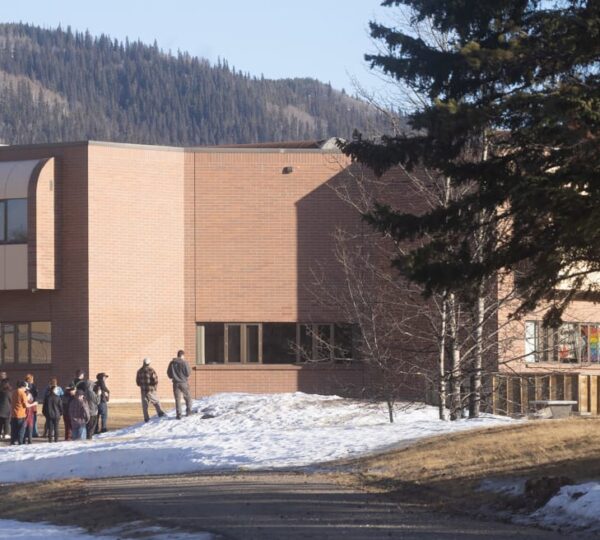
Around 1:20 p.m. local time, authorities received reports of an active shooter at Tumbler Ridge Secondary School, a public secondary school serving grades 7 through 12 with an enrollment of under 200 students.

The suspect entered the campus armed with at least two firearms, including a long gun and a modified handgun recovered by police, and opened fire. RCMP officers responded within minutes, but not before multiple shots were fired inside the building.

Inside the school, police found six people deceased — five students and one adult — as well as the suspect, who was discovered dead from an apparent self‑inflicted gunshot wound.

Several others were wounded, with first responders continuing to treat and transport victims throughout the evening.

Victims at the School

By official confirmation from BC RCMP, the victims killed at the school included:

School supplies

  • Abel Mwansa, 12

  • Ezekiel Schofield, 13

  • Kylie Smith, 12

  • Zoey Benoit, 12

  • Ticaria Lampert, 12

  • Shannda Aviugana‑Durand, 39 — an educational assistant

Two additional victims were airlifted to hospitals with life‑threatening injuries. As of initial reports, dozens more were treated for injuries and shock.

About the Suspect: Jesse Van Rootselaar

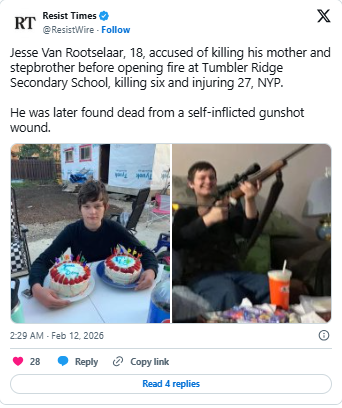
Police identified the suspected shooter as Jesse Van Rootselaar, an 18‑year‑old local resident who had previously attended Tumbler Ridge Secondary School but had dropped out about four years earlier.

Law enforcement officials indicated that Van Rootselaar died at the school from a self‑inflicted wound shortly after the attack.

RCMP Deputy Commissioner Dwayne McDonald publicly confirmed that Van Rootselaar had a history of mental health concerns and that police had visited the family residence on multiple occasions over several years due to welfare and safety concerns.

In one earlier visit, firearms were seized from the home under the Mental Health Act but were later returned after being petitioned back by a lawful owner.

Buy vitamins and supplements

Authorities noted that there was no clear motive identified at the time of early investigation, and there was no indication that specific individuals at the school were targeted.

Identity and Personal Background

Van Rootselaar was born biologically male and publicly identified as female, including on social media accounts and online profiles. Police initially described the suspect based on witness descriptions, later confirming identity following investigation.

The Immediate Explosion of Violence

The shooting unfolded rapidly, and students and teachers were caught off guard in a place normally associated with learning and safety.

Graham Stewart, a local education leader, described how classrooms were quickly locked and barricaded as the situation developed. Students used furniture to block doors while awaiting police assistance.

One student, 17‑year‑old Darian Quist, recounted the terror in his classroom as students and teachers tried to protect each other during the lockdown, highlighting the bravery and cooperation displayed by many of those trapped inside.

Another student, a 12‑year‑old girl named Maya Gebala, was reportedly critically injured while attempting to protect classmates by blocking the school’s library doors as the shooter approached.

Her family shared that she was shot while trying to keep others safe, a heroic act that underscored the human cost of the violence.

Community and National Response

The news of the shooting reverberated across Canada, where mass shootings are comparatively rare and often deeply shocking to the national psyche.

Canadian Prime Minister Mark Carney addressed lawmakers in Parliament, describing the tragedy as “a moment of deep national sorrow” and pledging federal support for communities affected by the violence.

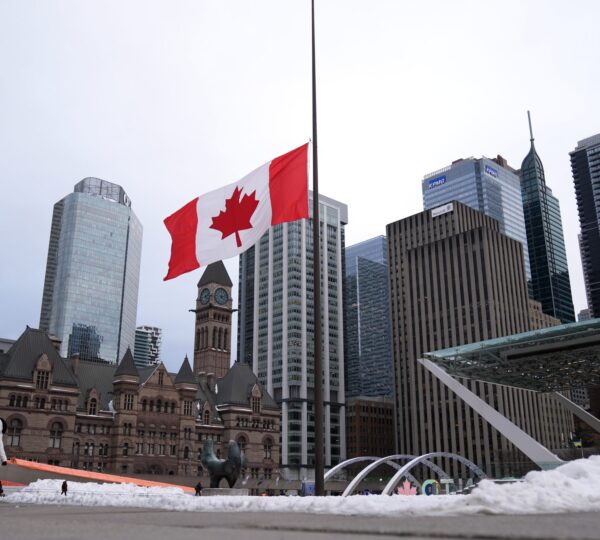
Flags on government buildings were ordered to fly at half‑mast for seven days in memory of those killed.

In British Columbia, Premier David Eby also expressed condolences and emphasized the government’s commitment to understanding what happened, especially in light of Van Rootselaar’s known mental health history and previous police interactions.

Buy vitamins and supplements

Hundreds of mourners gathered both in Tumbler Ridge’s central square and at provincial memorials in Victoria to pay tribute to the victims and offer support to grieving families.

Community leaders spoke of unity and support, highlighting the importance of healing together after such an unimaginable event.

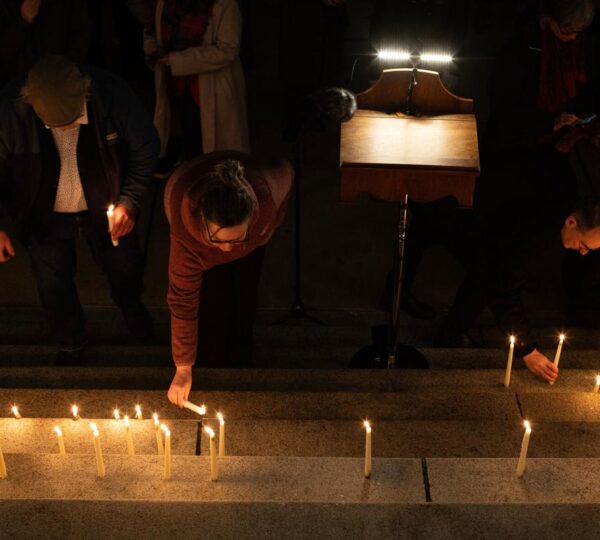
Locally, residents left flowers, teddy bears, candles, and handwritten notes at spontaneous memorials near the school and around town — poignant symbols of grief in a community where nearly everyone knows one another.

The Human Toll

The victims lost in Tumbler Ridge represented a broad cross‑section of life in the town: students just beginning their journeys, an experienced educator dedicated to helping young people grow, and a family irreversibly fractured by tragedy.

Families and friends described their loved ones with heart‑wrenching emotion. Families celebrated children for their kindness, intelligence, and potential, remembering them as “dreamers,” “friends,” and “future leaders.”

School supplies

Community members held public vigils, memorial hockey games, and prayer services in honor of those who were killed.

The broader Canadian public shared in the grief, with messages of support and condolence pouring in from across provinces and municipalities, emphasizing that even in large nations, small communities’ losses are felt deeply by all.

Aftermath and Ongoing Investigation

Law enforcement officials continue to investigate the exact circumstances surrounding the attack. Questions remain about how the weapons were obtained, what precipitated the violence, and what more could have been done to prevent it.

Police confirmed at early briefings that there was no manifesto or clear statement of motive discovered at the time, and that determining precise reasons might be complex and lengthy.

The shooting also reignited public conversations across Canada about mental health resourcesschool safety protocols, and gun access policies, even in a country that already has stricter firearm regulations than many of its neighbors.

Experts emphasize that addressing such tragedies involves not only emergency response and investigation but also long‑term support for survivors, families, first responders, and the broader community — individuals who may experience lasting trauma from witnessing or being near such horrific violence.

Healing and a Path Forward

In the days following the attack, Tumbler Ridge schools were closed to allow students, parents, and teachers time to grieve and begin recovery.

Counsellors and mental health professionals were deployed to the region, helping those directly affected cope with loss, anxiety, and fear.

Residents spoke of the tight bonds that characterize life in small towns — bonds that may help the community find strength in unity and mutual support.

“We look out for each other,” one resident told reporters, highlighting the ethos of care and connection that defines Tumbler Ridge.

National leaders also reiterated that healing from such a tragedy is not instantaneous. It requires sustained empathy, resources, and understanding — something that Canadians from coast to coast pledged to provide.

A Nation Mourns

The Tumbler Ridge shooting is now etched into Canada’s collective memory as a heartbreaking moment of loss, sorrow, and reflection.

It is a tragedy that touches not only the families who lost loved ones but also the broader network of communities and citizens who empathize deeply with their grief.

Even as authorities continue to investigate and answers are sought, the priority for many remains clear: supporting survivors, comforting those who mourn, and finding ways to ensure such violence is prevented in the future.

In the quiet moments after the tragedy, amid memorials and mourning, the people of Tumbler Ridge, and indeed all of Canada, are left to grapple with profound questions about safety, mental health, and community — questions that demand compassionate attention and thoughtful, evidence‑based responses.